
Asheville Court Docket Searches
Asheville runs no separate municipal criminal docket or city court portal. State citations, infractions, misdemeanors, preliminary felony matters, and civil cases all follow the Buncombe County District 40 path. Begin at the North Carolina eCourts Portal. You can search without a File & Serve account. That service handles filings and is separate from ordinary public access. When your search returns a hit, open the Case Summary. The state also calls it the Register of Actions.
- Open Portal and select Smart Search for an Asheville state case.
- Enter the full case number, citation number, or a careful party-name search.
- Use Advanced Filter Options after entering basic criteria, then choose Buncombe as Location.
- Open the case-number result and read the Case Summary, Case Events, hearings, and disposition blocks that appear.
- If no result appears, check the ticket and call Buncombe Criminal/Traffic at 828-259-3402.
One limit to know: a single Portal query returns no more than 200 results. If a broad Asheville name search hits that ceiling, narrow it by case type, date, or location. A record missing from public results may be older, restricted, filed elsewhere, or just beyond the terms you typed.
Asheville Portal Case Search
Once an Asheville citation enters state court, Smart Search can find it by party name, case number, citation number, attorney, business name, or other published criteria. Pick Buncombe when the Location control appears. The official 2020 Census source for Asheville supplies the city's population figures from that count.
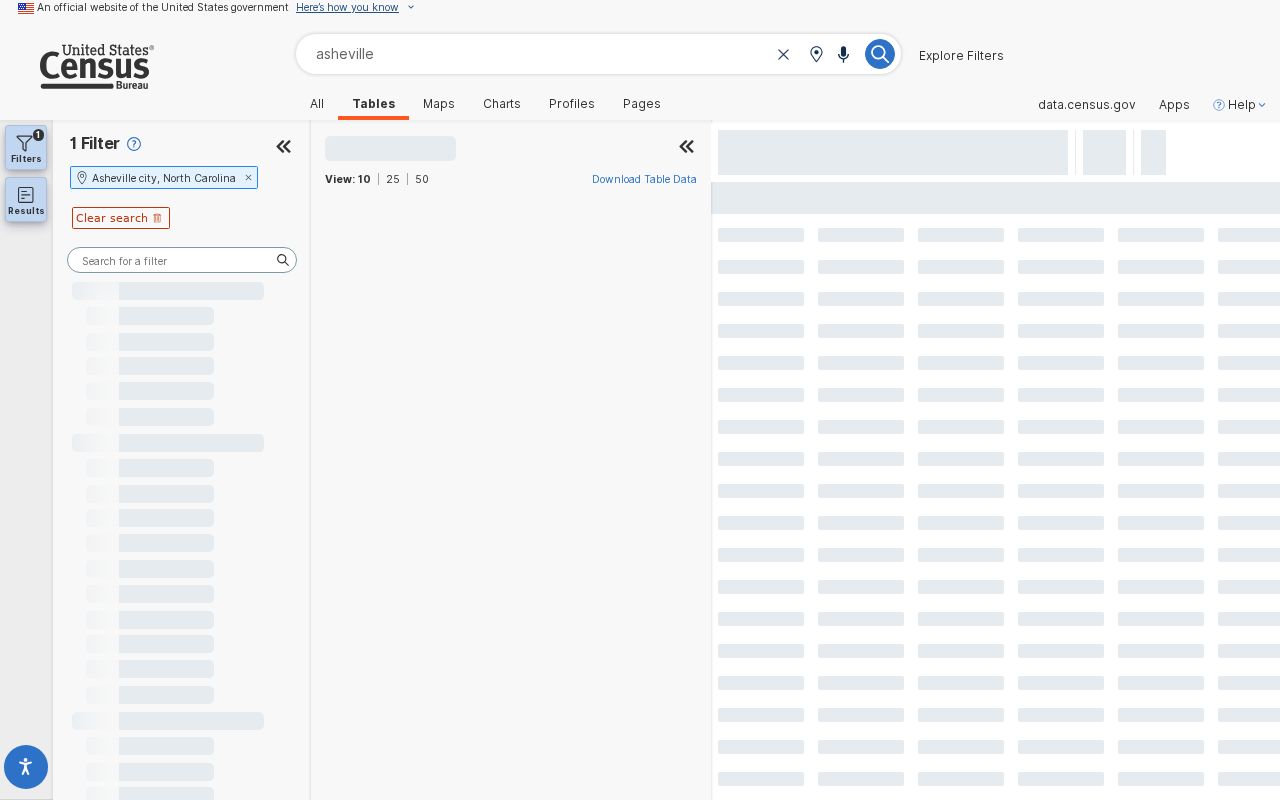
The Census page gives city context only. The shared state Portal, not a city case-search service, is the online starting point for Asheville court records. The North Carolina eCourts Portal displays the public search screen for any Asheville state-court lookup.
Enter your Asheville case, party, or citation criteria in that shared Portal interface, then open the returned Case Summary.
| Asheville search field | Use | Portal detail |
|---|---|---|
| Search Criteria | Initial search | Case number or party name is the usual starting value. |
| Citation Number | Traffic citation | Select it through Advanced Filter search type. |
| Location | County filter | Choose Buncombe to narrow an Asheville state case. |
| Case Number link | Record view | Opens the public Case Summary/Register of Actions. |
Note: A Portal return shows public case activity, but the official court copy comes from the Buncombe Clerk.
Inside the Asheville Municipal Court
The heading trips people up. Asheville runs no city Municipal Court for criminal cases. City police can hand you a citation to appear in court, yet no separate municipal criminal docket, calendar, or case portal exists. State cases land in Buncombe District Court, District 40. District Court handles misdemeanors, traffic, and infractions. The Buncombe County Clerk of Superior Court holds the local court file.
Two nearby addresses play different roles. Asheville City Hall sits at 70 Court Plaza and handles municipal business and police contacts. The Clerk and courthouse records route runs through 60 Court Plaza. City Hall cannot produce an Asheville Case Summary, Register of Actions, or certified court copy. The City of Asheville government page maps that municipal boundary.
Asheville counted 94,589 residents in the 2020 Census. Size does not add up to a city court system here. State cases stay centralized in Buncombe District 40.
Asheville Parking Appeal Records
An Asheville parking citation does not automatically become a traffic court case. The city handles parking appeals administratively. A state citation proceeds through the Buncombe court system. The Asheville traffic-safety information covers the police enforcement role, and enforcement and court disposition are separate stages.
A timely city appeal pauses the 15-day payment period before late fees apply. The form asks for identifying and vehicle details. It wants the citation, date and location, appeal reasons, and contact information. The city says it responds within 10 working days. None of this creates a Portal Case Summary or a Buncombe court setting. The official city traffic page follows.
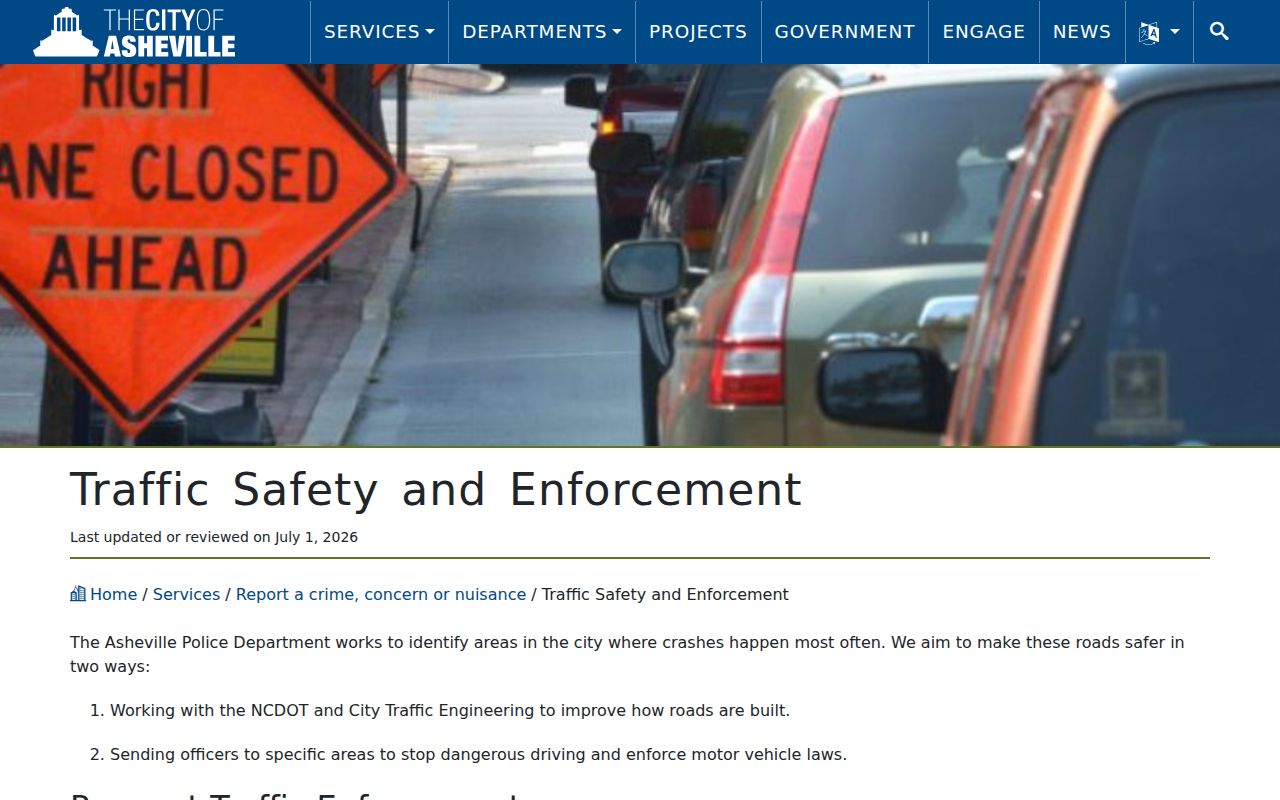
Use the Asheville city route for a municipal parking matter. Use the Buncombe court route for an Asheville state citation.
Finding Asheville Court Dates
Read your Asheville court date first from the citation or notice. Then check it against the freshest information. Portal Smart Search opens case history. Search Hearings exists to find current hearing times and places. For an Asheville case, select Buncombe as Location, pick a live Hearing Type, choose a search type and value, enter the date range, and submit. One caution. A past hearing listed in the Case Summary is not proof of the current setting.
| Date | Use the displayed current hearing date, not a prior Case Event. |
|---|---|
| Time | Read the time in the current Search Hearings result row. |
| Location | Select Buncombe and use the location or courtroom Portal displays. |
| Hearing Type | Choose the live menu option rather than guessing a local code. |
| Case status | Compare the hearing with later Case Events and any disposition. |
Still unclear? Call Buncombe Criminal/Traffic at 828-259-3402 to confirm. A clerk-confirmed setting beats an old web result.
Asheville Court Record Terms
Asheville court record searches borrow the state's vocabulary. The Case Summary is the Portal overview of a case. The Register of Actions is another name for that public history. Case Events are its dated entries. Portal shows only sections that hold information. So an empty block does not mean an Asheville case is wrong or complete.
- Case Summary
- The public Portal overview of an Asheville state case.
- Register of Actions
- The chronological public record name used for the same court activity.
- Case Event
- A dated filing, hearing, order, or other recorded action.
- Disposition
- The recorded outcome block when a disposition exists.
Portal runs near real time. It is not the official court record. For a stamped or certified Asheville case document, go to the Clerk rather than trusting an online screen as final.
Asheville Traffic Ticket Lookups
An Asheville traffic ticket is a state citation, not just a city matter. Search Portal Smart Search with the citation number. A case number or party name works if the citation route stalls. The state court file can show the charge, the hearing, Case Events, disposition, and financial information when applicable. The printed citation carries an initial date. Later court action can change it.
Some offenses are waivable. The ticket and the current waiver list control eligibility, so check both. If you do not waive, appear as directed. Paying an Asheville parking ticket is a city administrative service and must never be mixed with a state court payment. Countywide payment channels and consequences are covered in Buncombe traffic court records.
Asheville Police and Court Records
Police work and court records answer different questions. An Asheville officer or a city channel handles incident reports, officer contact, and municipal administrative matters. Once a citation becomes a District Court case, the Buncombe County Clerk of Superior Court holds the state court file. The 2020 Census record for Asheville tracks city population, not court filings.
Asheville runs no separate municipal court caseload. For verified counts, use state criminal and infraction reporting for Buncombe. Skip a police traffic page. That boundary matters. It keeps a police activity number from being mistaken for an Asheville court docket total. The official Asheville government page shows the city side of that divide.
City government location context does not change where Asheville state court records are maintained.
How Asheville Cases Reach the County
Asheville adds no municipal criminal court tier ahead of the county system. An Asheville officer or state citation lands in Buncombe District Court. The same case shows in the Portal Case Summary. District Court covers misdemeanors, infractions, traffic, family matters, and general civil matters within its jurisdiction. A felony or a qualifying appeal can move up to Superior Court. A legal-error appeal from the trial courts may reach the North Carolina Court of Appeals.
Record flow: Asheville Police citation → Buncombe District Court / eCourts Portal → Superior Court when a felony or appropriate appeal requires it → North Carolina Court of Appeals.
For the full court structure and every Buncombe access channel, see the Buncombe County court docket. Asheville location tells you where a case began. It does not replace the county clerk or the state portal as the source of the court record.
Asheville Clerk Case Copies
Start online when public material is available. For the official court-file copy of an Asheville state case, use the Buncombe County Clerk of Superior Court. The counter and public terminals sit at 60 Court Plaza, Asheville. Criminal and traffic questions go to 828-259-3402. Staff there can tell a Case Summary screen from the official record. They also handle certified copies.
Buncombe County Clerk of Superior Court
60 Court Plaza
Asheville, NC 28801
Criminal/Traffic: 828-259-3402
State court files, inspection, copies, and certification for Asheville cases.
Inspection is the fallback when a public Asheville Portal result is incomplete, older, or restricted. A city office cannot substitute for a Clerk request on an Asheville court case.
Who Can See Asheville Court Records
Who gets to look at an Asheville court docket? State law answers that, since these are Buncombe County files. Under G.S. 7A-109, the Clerk of Superior Court keeps the records, dockets, and indexes open for inspection during regular office hours unless a statute says otherwise. The public-records law, G.S. 132-1, adds that anyone may get copies at minimal or actual cost.
Public access boundary: Portal provides public material but is not the official court record. Sealed, confidential, and restricted records do not become public because an Asheville search was attempted. Juvenile records have separate limits under state law.
The portal masks or withholds protected details. So a missing result proves nothing about whether an Asheville case existed or was expunged. Ask the Clerk about the records route; the staff cannot give legal advice on access rights.
Asheville Case Access Limits
Not every Asheville court record is open to the public. State law draws firm lines. G.S. 7B-3000 closes juvenile delinquency records, and G.S. 7B-2901 does the same for abuse, neglect, and dependency files unless a court authorizes access. Sealed and expunged matters never appear in the Portal as ordinary public material. The Portal also skips public Social Security-number checks and may mask a date of birth.
Is an Asheville case simply not showing up? Check the name spelling first. Then confirm the case number and the Buncombe location. If it still will not surface, contact the Clerk at 60 Court Plaza. That path honors the public-record rule while accepting that restricted records have legal bounds.